

Sciatica Relief in Irmo: When to See a Chiropractor
Finding sciatica relief starts with identifying what’s actually causing the pain. A careful evaluation can help separate nerve-related symptoms from muscle, joint, or other medical problems.
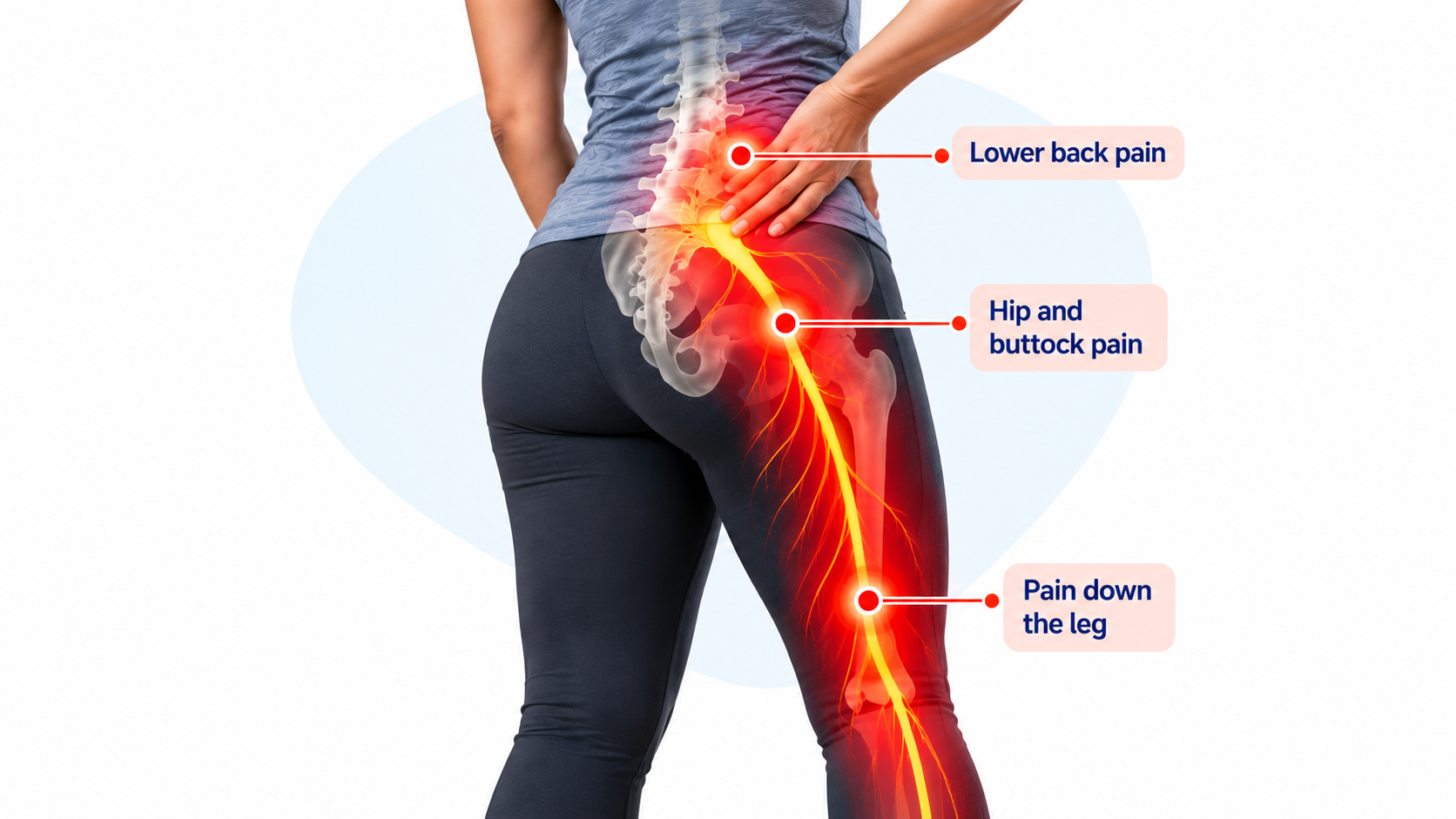
Sciatica is a group of symptoms linked to irritation of the sciatic nerve, not every ache that reaches the hip or leg. In simple terms, it’s pain, tingling, or numbness that follows the nerve’s path from the lower back through the buttock and down the back of one leg. That distinction matters, because the right next step depends on what’s really going on.
Long periods at a computer can also aggravate the lower back and surrounding tissues. Our guide to back pain from desk work in Irmo explains how sitting, posture, and limited movement can contribute to recurring discomfort.
What Sciatica Feels Like and Why It Happens
The sciatic nerve is the longest nerve in the body. It forms from nerve roots in the lower spine, then travels through the buttock and down the back of each leg. When something irritates or compresses part of that pathway, symptoms can show up anywhere along it.
Common causes include a herniated or bulging disc, age-related changes in the spine, and narrowing of the spaces where nerves exit the spinal column. Less often, tension in the deep muscles of the hip plays a role.
People describe sciatica in different ways. Some feel a sharp, electric pain shooting down the leg. Others notice burning, tingling, pins and needles, or numbness. In some cases, the leg or foot feels weak. Symptoms usually affect one side and often get worse with prolonged sitting, coughing, sneezing, or bending forward.
Still, pain in the hip or leg doesn’t automatically mean sciatica. Hip joint problems, muscle strains, circulation issues, and other nerve conditions can feel surprisingly similar. That’s why self-diagnosing based on location alone can send you in the wrong direction.
Sciatica Versus General Lower-Back Pain
Most lower-back pain is localized. It tends to stay in the low back, may feel achy or stiff, and often changes with movement or position. Muscle strains and irritated joints commonly fit this pattern.
Sciatica behaves differently. The pain usually travels past the buttock and into the thigh, calf, or foot, and the leg pain is often worse than the back pain itself. Tingling or numbness along a specific strip of the leg is another clue.
Symptom location offers useful hints, but it isn’t a diagnosis. A hands-on physical assessment, and in some cases imaging or a referral to another provider, helps confirm where the problem is coming from.
When to See a Chiropractor for Sciatic Nerve Pain
Many mild episodes of lower back and leg pain ease with time, gentle activity, and sensible changes to daily routines. But some situations call for a professional look.
 Consider an evaluation with a chiropractor for sciatica in Irmo if your symptoms have lasted more than a couple of weeks or keep coming back. It’s also worth getting checked if the pain makes it hard to sit through work or a drive, limits how far you can walk, or leaves your back feeling stiff and restricted.
The same goes if you’ve already made reasonable adjustments, like moving more and sitting less, and you aren’t seeing progress.
Before recommending any treatment, a responsible chiropractor should review your symptom history and medical background, then check your strength, reflexes, sensation, and movement. That information shapes whether chiropractic care is a good fit or whether another provider should be involved.
What to Expect During a Sciatica Evaluation
A sciatica evaluation typically starts with a conversation. You’ll talk through when the pain started, what makes it better or worse, and how it’s affecting your work, sleep, and daily activities.
Next comes a physical exam. This usually includes neurological screening, such as reflex, strength, and sensation testing, along with orthopedic tests that gently stress specific structures to see which ones reproduce your symptoms.
Your chiropractor will also watch how you move as you bend, twist, walk, and shift positions. If you’ve had X-rays or an MRI in the past, bring the reports so they can be reviewed.
Imaging isn’t automatically necessary. It should be recommended only when exam findings or your medical history support it, not as a routine first step.
How Conservative Chiropractic Care May Support Recovery
When the evaluation points to a mechanical cause, such as restricted spinal joints, limited mobility, or muscle tension, conservative care may be a reasonable option for sciatic nerve pain treatment.
Depending on your findings, a care plan might include appropriately selected spinal manipulation, mobility work for the lower back and hips, targeted exercises, ergonomic changes at your desk or in your car, and guidance on daily activity.
According to the National Center for Complementary and Integrative Health, spinal manipulation may help some people with low back pain, though results vary from person to person. The American College of Physicians also lists spinal manipulation among the noninvasive options clinicians can consider for low back pain.
Some care plans also include adjunct therapies. You can read more about how MLS laser therapy supports chiropractic care. It may be considered when it’s clinically appropriate, but it’s one possible tool, not a guaranteed cure.
No single approach works for everyone, and a good plan gets adjusted based on how you respond.
Why Movement and Home Guidance Matter
What happens between visits matters as much as what happens in the clinic. Good care should help you manage the habits that may be feeding your symptoms.
That might mean taking short, tolerable walks, changing positions regularly when you sit for long stretches, and doing a few individualized exercises at home. Small, consistent changes tend to add up.
Prolonged bed rest generally isn’t recommended for sciatica. Staying gently active usually supports recovery better, unless another healthcare professional has advised rest for a specific reason.
Sciatica Red Flags That Require Prompt Medical Care
Most sciatica isn’t dangerous, but certain symptoms can signal a serious problem that needs medical attention right away. Seek urgent or emergency care if you notice any of the following:
 Progressive or rapidly worsening weakness in the leg or foot
- New loss of bladder or bowel control
- Numbness in the groin, inner thighs, or saddle area
- Symptoms affecting both legs
- Pain following a major fall, car accident, or other trauma
- Fever along with back or leg pain
- Unexplained weight loss or a history of cancer
- Severe pain that doesn’t ease with rest or position changes
These signs can point to conditions such as cauda equina syndrome, infection, or fracture. If cauda equina syndrome or another serious condition is suspected, go to the emergency room. Don’t wait for a scheduled appointment.
Building a Broader Plan for Recurring Pain
Pain doesn’t happen in isolation. Sleep quality, physical activity, body weight, metabolic health, and other health conditions can all influence how your body handles pain and how quickly it recovers.
If your lower back and leg pain keeps returning, or you’re also dealing with fatigue, blood sugar concerns, or other symptoms that don’t fit a purely mechanical pattern, a broader look may help. Our functional health services at Origins: Health by Design can explore those factors alongside your chiropractic care.
Frequently Asked Questions About Sciatica Relief
How do I know if my leg pain is sciatica?
Sciatica commonly causes burning, tingling, numbness, or sharp pain that travels from the lower back or buttock into one leg. However, hip, vascular, muscular, and other nerve conditions can produce similar symptoms. A physical examination is the safest way to identify the likely source.
Can a chiropractor help with sciatica?
Chiropractic care may help some people whose symptoms are associated with mechanical lower-back problems, restricted movement, or related muscle tension. Treatment suitability depends on the cause and examination findings. A responsible chiropractor will screen for warning signs and refer you for medical evaluation when conservative care isn’t appropriate.
What are the red flags for sciatica?
Seek urgent medical care for new loss of bladder or bowel control, numbness around the groin or saddle area, rapidly worsening weakness, symptoms in both legs, or severe pain following significant trauma. Fever, unexplained weight loss, or a history of cancer also warrants prompt evaluation.
Is walking good for sciatic nerve pain?
Gentle walking often helps people stay active without resorting to prolonged bed rest, but the right amount varies. Start with short, comfortable periods and stop if pain, numbness, or weakness clearly worsens. A clinician can recommend activity based on your examination and symptom pattern.
How long does sciatica usually last?
Recovery time depends on the cause, severity, daily demands, and your overall health. Some episodes improve within several weeks, while persistent or recurring symptoms may take longer and require a structured plan. Worsening weakness or other neurological changes should be assessed without waiting for them to improve on their own.
Not sure if it’s sciatica? An evaluation is the best place to start.
Choose Sciatica Care Based on a Proper Evaluation
Sciatica isn’t one-size-fits-all. The appropriate plan depends on where the symptoms originate, how they affect movement, and whether neurological warning signs are present. A thorough evaluation helps determine whether conservative chiropractic care, another healthcare provider, or coordinated treatment is the sensible next step.
If leg pain is disrupting work, driving, sleep, or everyday movement, explore our wellness chiropractic services and schedule an assessment with Irmo Family Chiropractic. For fatigue, metabolic concerns, or other symptoms that may require a broader evaluation, learn about functional health services at Origins: Health by Design.
This article provides general education and doesn’t replace an individual diagnosis or treatment plan from a qualified healthcare provider.
References
American Chiropractic Association, Back Pain Facts and Statistics: acatoday.org
National Institute of Neurological Disorders and Stroke, Low Back Pain: ninds.nih.gov
National Center for Complementary and Integrative Health, Spinal Manipulation: What You Need To Know: nccih.nih.gov
American College of Physicians, Noninvasive Treatments for Acute, Subacute, and Chronic Low Back Pain: acpjournals.org
JAMA Network Open, Effect of Usual Medical Care Plus Chiropractic Care on Low Back Pain: jamanetwork.com
StatPearls, Sciatica: ncbi.nlm.nih.gov