Visit our Office
1032-A Kinley Rd. Irmo
Give us a Call
(803) 732-6635
Send us an E-mail
irmochiro@gmail.com
image, auto accident chiropractor Irmo

Auto Accident Chiropractor in Irmo, SC: What To Do in the First 72 Hours

Those first 72 hours after a car accident in Irmo can make or break your recovery. Even if you “feel fine,” hidden injuries like whiplash and back strain can show up days later. In this guide, Irmo Family Chiropractic walks you through exactly what to do after a crash, when to see an auto accident chiropractor, and how early care protects both your health and your insurance claim.

Back Pain After a Car Accident in Irmo, SC: Why It Can Show Up Late and What to Do Next

Back pain after car accident Irmo SC searches usually happen for one reason: the pain did not show up right away, or it is getting worse instead of better. That delayed pattern is more common than people realize after a collision. Muscles tighten, inflammation builds, and the spine absorbs force even in crashes that seem minor at first. In this article, Irmo Family Chiropractic explains why lower back pain can appear hours or days later, what warning signs to watch for, and how a targeted recovery plan can help you move better and protect your long term health.

Why Back Pain After a Car Accident Can Show Up Late

One of the most confusing things about a car accident injury is the timing. You walk away from the scene, tell the officer you feel okay, and drive yourself home. Then two or three days later, you can barely get out of bed.

This is not unusual. After a collision, your body floods with adrenaline and cortisol. Those stress hormones temporarily mask pain signals so you can respond to the emergency in front of you. Once those chemicals settle, the actual damage starts making itself known.

Soft tissue injuries in particular follow this pattern. Strained muscles, stretched ligaments, and inflamed joints around the lumbar spine often take 24 to 72 hours to fully present symptoms. In some cases, discomfort does not peak until a full week after the crash.

People across Irmo, Lake Murray, Harbison, and Northwest Columbia deal with this every day after fender benders and highway collisions alike. The speed of impact matters less than most people assume. Even low speed rear end crashes generate enough force to shift vertebrae, irritate nerves, and trigger protective muscle spasms in the lower back.

What Happens to the Lower Back During a Collision

Your lower back is especially vulnerable during a car accident because of how force travels through the body. In a rear end collision, the torso gets pushed forward while the pelvis stays anchored by the seatbelt. That creates a rapid flexion and extension movement through the lumbar spine that your muscles were not prepared to absorb.

Here is what can happen in that split second of impact:

Spinal joints can compress or shift out of alignment, reducing the normal space between vertebrae. Muscles surrounding the spine contract to protect the area, which leads to stiffness that can become painful over the following days. Discs between the vertebrae may bulge or sustain micro tears, especially if there was already early degeneration present. Inflammation builds gradually as the body sends fluid and immune cells to the damaged tissues, which is why swelling and soreness often increase before they improve.

Even without a fracture or major structural injury, this combination of joint compression, muscle guarding, and inflammation is enough to cause significant pain and limited mobility.

Common Signs Your Back Pain Needs More Than Rest

Some back pain after a car accident resolves on its own within a few days. But certain patterns suggest the injury is more involved and needs professional evaluation.

You should pay attention if the pain is getting worse instead of better after the first 48 to 72 hours. Stiffness that limits your ability to bend, twist, or sit for normal periods of time is another signal worth noting. Pain that radiates into one or both legs could indicate nerve involvement, such as sciatica caused by disc pressure on the nerve root. Muscle spasms that keep returning even after rest, stretching, or over the counter medication also warrant a closer look. Difficulty sleeping because you cannot find a comfortable position is a common complaint that people underestimate but often points to a structural issue rather than simple soreness.

If any of these sound familiar, the pain is telling you something specific. Rest alone is unlikely to resolve the underlying cause, and waiting too long can allow compensatory movement patterns to develop that make recovery harder down the road.

When to Seek Emergency Care vs When to Book a Chiropractic Evaluation

Not every back injury after a car accident requires an emergency room visit, but some do. Knowing the difference can save time, money, and unnecessary worry.

Go to the emergency room or call 911 if you experience any of the following: loss of bladder or bowel control, numbness or tingling in both legs at the same time, severe weakness in the legs that makes it difficult to stand, sharp pain that does not change with any position, or symptoms that appeared immediately after a high speed or rollover collision.

These can be signs of spinal cord involvement, cauda equina syndrome, or fracture, and they require imaging and emergency medical intervention.

Schedule a chiropractic evaluation if your symptoms look more like this: dull or aching lower back pain that appeared gradually after the collision, stiffness that is worse in the morning or after sitting, pain that shifts depending on your position or movement, tightness across the hips or glutes on one side, or soreness that has lingered for more than a few days without improving.

These patterns are more consistent with soft tissue injury, joint misalignment, and inflammation, all of which respond well to chiropractic care and complementary therapies. The sooner you get evaluated, the sooner a provider can identify exactly what is driving the pain and build a plan around it.

Not sure if your back pain is serious enough to get checked? That question alone is worth a visit. 

How Chiropractic Care Supports Car Accident Recovery in Irmo

Chiropractic care after a car accident focuses on restoring proper alignment, reducing nerve irritation, and helping the body heal without relying on medication as a first line approach.

At Irmo Family Chiropractic, the process starts with a thorough evaluation. That includes reviewing the details of the accident, identifying areas of restricted movement, and assessing spinal alignment to find where the injury is creating the most dysfunction. From there, a care plan is built around your specific needs.

Spinal adjustments help restore normal joint mechanics in the lumbar spine so that compressed or shifted vertebrae are no longer putting pressure on surrounding tissues. This can reduce pain, improve range of motion, and take stress off the nervous system.

Soft tissue work targets the muscle guarding and tension that develops as a protective response after a collision. Releasing that tension allows the body to move more freely and accelerates the natural healing process.

Corrective exercises and movement guidance are also part of the plan. Strengthening the stabilizing muscles around the lower back helps prevent reinjury and gives the spine better long term support.

Chiropractic care is not about a single adjustment fixing everything overnight. It is about building a structured path from pain and restriction back to normal function, with each visit moving you closer to that goal. For a detailed look at what this process involves, visit the Auto Accident Injury Treatment page.

When MLS Laser Therapy and Massage May Help
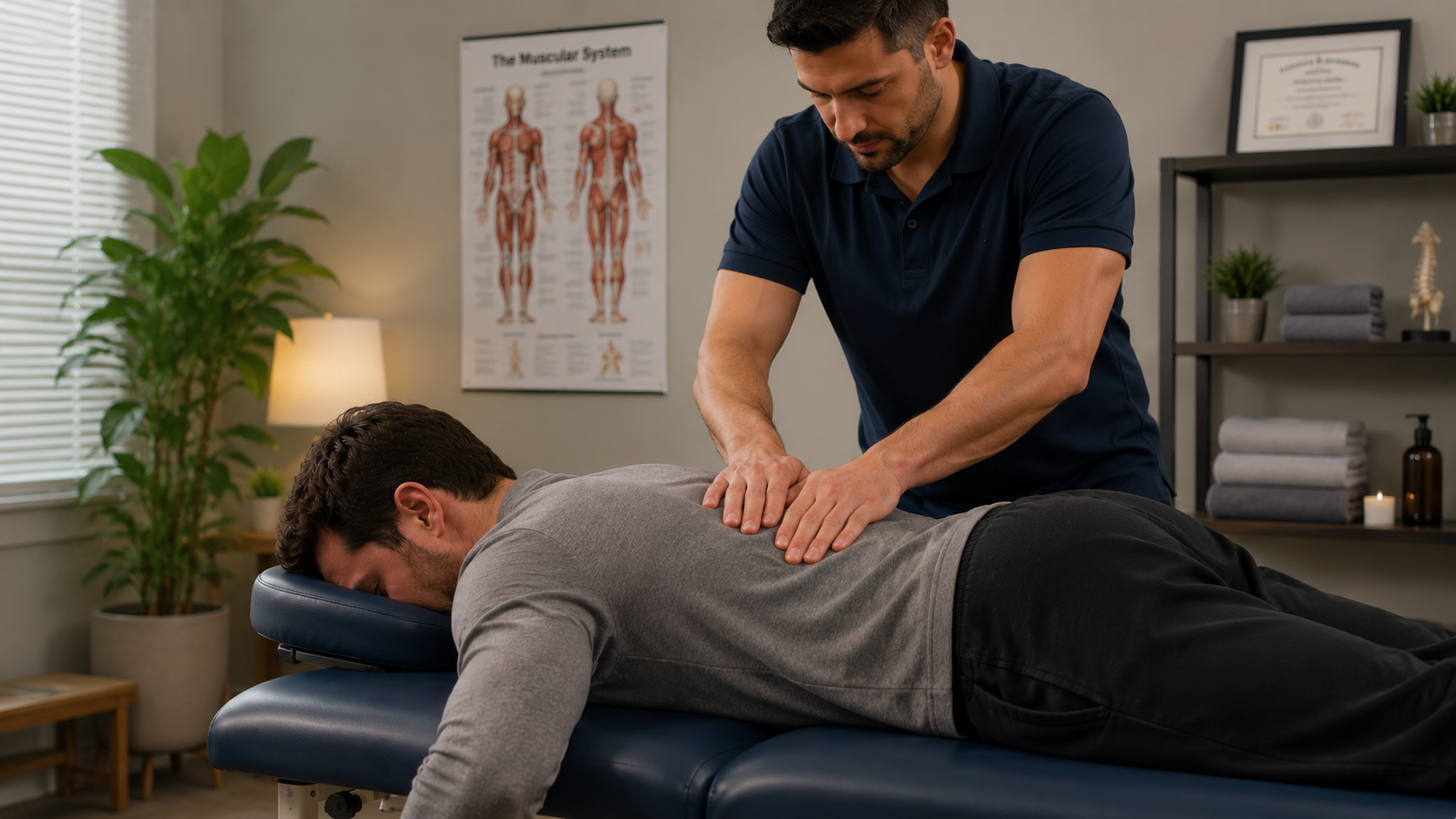
Some car accident injuries benefit from more than adjustments alone, especially when inflammation is significant or when soft tissue damage is widespread.

MLS Laser Therapy uses dual wavelength laser energy to penetrate deep into inflamed tissue. One wavelength targets pain at the nerve level while the other reduces swelling and promotes cellular repair. The treatment is painless, requires no downtime, and is FDA cleared for musculoskeletal conditions. For lower back injuries with stubborn inflammation, it can speed up the timeline for relief in ways that rest and ice alone cannot match.

Massage therapy plays a complementary role by addressing the chronic muscle tension that often accompanies spinal injuries. After a collision, muscles around the lumbar spine can stay locked in a guarded state for weeks. Therapeutic massage helps release that tension, improve blood flow to damaged tissues, and restore flexibility so that chiropractic adjustments hold more effectively between visits.

When these therapies are layered together, they address the injury from multiple angles at once: alignment, inflammation, nerve irritation, and muscular tension. To see how this combined approach works in practice, read How Chiropractic, MLS Laser, and Massage Work Together After a Car Accident in Irmo.

What to Expect at an Auto Accident Injury Evaluation

If you have never visited a chiropractor after a car accident, it helps to know what the first appointment looks like.

Your evaluation at Irmo Family Chiropractic will typically include a detailed conversation about the accident itself, including the direction of impact, your position in the vehicle, and whether you braced before the collision. These details help the provider understand the mechanics of your injury.

A physical examination follows, which involves checking your posture, range of motion, muscle strength, and areas of tenderness along the spine. Orthopedic and neurological tests may be performed to assess nerve function and rule out more serious structural damage.

Based on the findings, the provider will explain what is happening in your lower back, why you are experiencing the symptoms you have, and what a recommended care plan looks like. You will know before you leave whether your injury is something chiropractic care can address, whether additional imaging is needed, or whether a referral to another specialist makes more sense.

There is no pressure to commit to a long term plan on the spot. The goal of the first visit is clarity: understanding what you are dealing with so you can make an informed decision about how to move forward.

FAQ: Back Pain After a Car Accident in Irmo, SC

Why does back pain show up days after a car accident?
Adrenaline and cortisol released during a collision can mask pain signals for hours or even days. Once those stress hormones return to normal levels, inflammation and tissue damage that were already present begin producing noticeable symptoms. Soft tissue injuries like muscle strains and ligament sprains are especially known for this delayed onset pattern.

When should I worry about lower back pain after a crash?
If your pain is getting worse rather than better after the first few days, if it radiates into your legs, or if you are experiencing numbness, tingling, or weakness, those are signs the injury may involve a disc or nerve and should be evaluated promptly. Loss of bladder or bowel control is a medical emergency that requires immediate attention.

Can chiropractic care help back pain after a car accident?
Yes. Chiropractic care is one of the most commonly recommended approaches for musculoskeletal injuries sustained in car accidents. It addresses joint misalignment, nerve irritation, and restricted mobility through spinal adjustments, soft tissue therapy, and corrective exercises. Many patients experience meaningful improvement within the first few weeks of care.

What are red flags after a car accident back injury?
Red flags include severe pain that does not change with position, loss of sensation in the legs or feet, inability to bear weight, and loss of bladder or bowel function. These symptoms suggest possible spinal cord or nerve root compression and should be evaluated in an emergency setting.

How long does back pain after a car accident last?
It depends on the severity of the injury and how quickly treatment begins. Mild soft tissue injuries may resolve within two to four weeks with appropriate care. More significant injuries involving disc damage or chronic inflammation can take several months of consistent treatment. Early intervention generally leads to shorter recovery timelines and better outcomes.

Don’t Ignore Delayed Back Pain After a Crash

Back pain that shows up later is still real, still treatable, and still worth taking seriously. The sooner you understand what is driving the pain, the easier it is to build a recovery plan that fits your injury instead of guessing your way through it. If you want to see how combined care can support healing, read How Chiropractic, MLS Laser, and Massage Work Together After a Car Accident in Irmo. And if you are ready for a personalized evaluation, visit our Auto Accident Injury Treatment page or Contact Us at Irmo Family Chiropractic today.


Can Your Chiropractor Help Lower Your Blood Pressure? What Irmo Patients Are Finding Out

TL;DR: Research suggests that specific chiropractic adjustments, particularly to the upper cervical spine, can meaningfully reduce blood pressure in some patients. This effect is linked to the chiropractic nervous system connection: when spinal tension is reduced, the body’s stress response calms and cardiovascular regulation improves. Chiropractic is not a replacement for prescribed medication, but it is a compelling, evidence backed complement to a complete wellness plan.

High blood pressure rarely comes with obvious symptoms, which is part of what makes it so easy to ignore until it becomes impossible to. If you have been told your numbers are creeping up, or you are already managing hypertension and want to do more than just take a pill, you are asking the right questions about chiropractic care and blood pressure in Irmo, SC.

What a lot of patients at our Irmo clinic have discovered is that wellness chiropractic in Irmo does more for their overall health than they expected, and their blood pressure is often part of that story.

The Nervous System Link Most People With High Blood Pressure Have Never Heard Of

How spinal tension activates the body’s stress response

Your spine houses the nervous system pathways that regulate everything from heart rate to blood vessel constriction. When tension builds along the upper spine, especially around the neck and base of the skull, it can keep the body’s stress response switched on longer than it needs to be. Over time, that constant low level activation makes it harder for blood pressure to settle back down, even when nothing stressful is actively happening.

The role of the upper cervical spine in cardiovascular regulation

The upper cervical spine sits close to the brainstem, which houses centers that control heart rate and blood vessel tone. Misalignment or restricted movement in this region can interfere with the signals traveling between the brain and the cardiovascular system. This is the foundation for the chiropractic nervous system and blood pressure connection that has drawn growing research attention over the past two decades.

What the Research Actually Shows About Chiropractic and Blood Pressure

The University of Chicago hypertension study and what it found

One of the most cited studies in this space came out of the University of Chicago Hypertension Center, where researchers looked at what happened to patients’ blood pressure after a specific upper cervical adjustment known as the Atlas adjustment. Participants who received the adjustment saw a drop in blood pressure comparable to what is typically achieved with a two drug combination, and the effect held up over the eight week study period.

What upper cervical adjustments do to the Atlas vertebra and surrounding tissue

The Atlas adjustment blood pressure chiropractic technique targets the C1 vertebra, sometimes called the Atlas, which sits directly beneath the skull. Because of its position, even small misalignments here can place disproportionate stress on surrounding nerves and blood vessels. Gently correcting that alignment appears to reduce the mechanical and neurological pressure contributing to elevated readings.

What we know and what we are still learning

It is worth being honest about where the science stands. The existing studies are promising, but they are still limited in size and scope compared to the decades of research behind blood pressure medication. Upper cervical chiropractic blood pressure South Carolina researchers and clinicians alike see this as a valuable complementary approach, not a proven standalone cure, and more large scale studies are needed before it can be treated as a primary treatment.

Is Chiropractic Care Safe if You Have High Blood Pressure?

What to tell your chiropractor before your first visit

If you are managing high blood pressure, let your chiropractor know before your first visit, along with any medications you currently take and how long you have been on them. This information helps your provider tailor the visit, choose appropriate techniques, and monitor your response over time.

How we adjust our approach for patients managing cardiovascular conditions

At our clinic, patients with cardiovascular conditions receive a more gradual, closely monitored care plan. We check in regularly, adjust technique and frequency based on how your body responds, and stay in communication with your primary care provider when appropriate. Chiropractic and high blood pressure Columbia SC patients can pursue this path safely when it is approached thoughtfully and individually.

Chiropractic as Part of a Bigger Wellness Picture

Why stress reduction and nervous system balance matter for blood pressure

Blood pressure rarely rises for just one reason. Chronic stress, poor sleep, and an overworked nervous system all play a role, and holistic blood pressure management Irmo SC patients pursue tends to work best when it addresses several of these factors at once rather than treating blood pressure as an isolated number.

How functional medicine at our Irmo clinic can work alongside chiropractic

Functional medicine looks at the root causes behind symptoms rather than just the symptoms themselves. When paired with chiropractic adjustments, functional medicine at our Irmo clinic can help identify contributing factors like inflammation, nutrient deficiencies, or hormonal imbalance that may also be influencing your blood pressure.

Lifestyle factors that support your results between visits

Chiropractic care tends to work best alongside supportive daily habits. Regular movement, consistent sleep, hydration, and stress management practices like deep breathing or time outdoors all reinforce the nervous system benefits patients experience in the office. Natural ways to lower blood pressure Irmo SC residents ask about most often start with these fundamentals.

What Wellness Chiropractic Looks Like at Irmo Family Chiropractic

Ongoing maintenance versus acute care

Some patients come to us for acute care after an injury or flare up of pain, while others come specifically to a wellness chiropractor for hypertension near me, hoping to support long term cardiovascular health. Both paths are valid, but the plans look different. Wellness care is typically more consistent and spaced out over time, designed to keep the nervous system functioning well rather than just resolving a single issue.

Building a plan around your long-term health goals

Whether your goal is lowering your numbers, reducing reliance on medication over time in partnership with your physician, or simply feeling calmer and more regulated day to day, we build your care plan around what matters most to you, adjusting it as your needs change.

Frequently Asked Questions About Chiropractic Care and Blood Pressure

Can chiropractic care lower blood pressure on its own?

For some patients, specific upper cervical adjustments have been associated with meaningful reductions in blood pressure. However, chiropractic care works best as part of a broader wellness plan and should never replace prescribed medication without your physician’s guidance.

What is the Atlas adjustment?

The Atlas adjustment is a precise, gentle correction targeting the C1 vertebra at the top of the spine. It is designed to relieve pressure on nearby nerves and blood vessels that can influence cardiovascular regulation.

How many visits does it take to notice a difference?

This varies by individual, but many patients in published research began noticing changes within a few weeks of consistent care. Your chiropractor can give you a more personalized timeline based on your health history and goals.

Should I stop my blood pressure medication if I start chiropractic care?

No. Chiropractic care should be viewed as a complement to your existing treatment plan, not a replacement. Any changes to medication should only be made in consultation with your prescribing physician.

Can stress-related spinal tension raise my blood pressure over time?

Yes, chronic muscular tension in the neck and upper back can keep the nervous system in a heightened stress state, which over time may contribute to elevated blood pressure. Addressing that tension is one reason chiropractic care and blood pressure management in Irmo often go hand in hand.

See why more Irmo patients are turning to chiropractic for blood pressure relief.

Your Heart Health Deserves a Whole-Body Approach

Managing blood pressure well means looking at everything that influences it, and spinal tension, nervous system overload, and chronic stress are three factors most conventional treatment plans do not address.

Chiropractic care will not replace your cardiologist or your prescription, but it can be a meaningful part of taking better care of yourself long term. To learn more about how we support patients at every life stage, take a look at our guide to whole-family chiropractic care in Irmo.

At Irmo Family Chiropractic, we offer wellness chiropractic in Irmo built around your actual health goals, not just symptom management. Ready to take a more complete approach? Schedule a wellness consultation in Irmo today.

The Asthma Connection Most People Miss: How Chiropractic Care Helps You Breathe Better

TL;DR: Chiropractic care does not cure asthma, but a growing body of research supports its role in reducing the frequency and severity of asthma symptoms. The connection runs through the thoracic spine and nervous system: misalignments in the mid back affect the nerve supply to the lungs and diaphragm, and restricted thoracic joints reduce the mechanical range of chest expansion during breathing. Correcting those restrictions can meaningfully support respiratory function alongside conventional treatment.

It sounds surprising. Sitting down for a spinal adjustment sounds like a strange path to breathing easier. But chiropractic care for asthma Irmo SC patients have quietly explored for years is grounded in a real, well documented connection between your spine and your respiratory system.

This is not about replacing your inhaler or your child’s controller medication. It is about addressing a piece of the puzzle that most asthma treatment plans never look at.

At Irmo Family Chiropractic, we provide family chiropractic care for kids and adults in Irmo and have seen firsthand how spinal health influences overall wellness in ways that go far beyond back pain.

The Spine-Respiratory Connection You Were Never Told About

How the thoracic spine directly influences the nerves controlling your lungs

The nerves that regulate the lungs and diaphragm branch out from the thoracic spine, the mid section of the back between the shoulder blades and the lower ribs. When vertebrae in this region become restricted or misaligned, the nerve signals traveling to the respiratory muscles can be disrupted. This spine and respiratory function chiropractic connection is the foundation for why thoracic health matters for anyone managing asthma.

Why restricted mid-back joints reduce chest wall mobility

Full, easy breathing depends on the rib cage being able to expand and contract freely. When the joints connecting the ribs to the thoracic spine become stiff or restricted, the chest wall cannot move through its full range, which forces someone to rely more heavily on shallow, less efficient breathing patterns. A thoracic spine and lung function chiropractor works specifically to restore that mobility.

What Research Says About Chiropractic Care and Asthma

Key studies on pediatric asthma and chiropractic

Case studies published in chiropractic and respiratory journals have documented reductions in asthma symptom frequency and rescue inhaler use among children receiving chiropractic care alongside their standard treatment. These findings have helped fuel interest in pediatric asthma chiropractic Columbia SC families are increasingly asking about.

What we know for certain and where research is still evolving

What is well established is that thoracic spine mobility affects breathing mechanics, and that nervous system regulation influences airway responsiveness. What is still evolving is the precise size of the effect chiropractic care has on asthma severity across larger populations. Researchers continue to call for more controlled studies to quantify these outcomes more precisely.

Why this is not an alternative to medication, but it is a legitimate complement

No credible chiropractor or researcher suggests that spinal adjustments should replace an inhaler or controller medication. Asthma is a medical condition that requires ongoing physician oversight. Chiropractic care for reactive airway disease South Carolina patients pursue is best understood as a complementary layer of support, not a substitute for prescribed treatment.

What Asthma Symptoms Can Chiropractic Help With?

Frequency and severity of flare-ups

Many patients report fewer and milder flare-ups once thoracic mobility improves and nervous system tension decreases, though individual results vary and should always be tracked alongside your existing asthma management plan.

Tightness, restricted chest expansion, and shallow breathing patterns

Chronic tightness through the chest and upper back often shows up as shallow, effortful breathing. Restoring movement to the thoracic spine and surrounding musculature can ease this tightness and support fuller, more natural chest expansion.

Nervous system overactivity and bronchospasm

The nervous system plays a direct role in airway tone. When the body’s stress response stays activated, it can contribute to bronchospasm and heightened airway sensitivity. Chiropractic and asthma relief Columbia SC patients experience often centers on calming this nervous system overactivity.

Is Chiropractic Care Safe for Children With Asthma?

What pediatric adjustments look like in the thoracic region

Pediatric chiropractic adjustments are gentle, low force, and adapted specifically for a child’s smaller frame and developing spine. Natural asthma treatment for children Irmo SC parents consider should always involve a provider experienced in pediatric care, and our clinic tailors every adjustment to the child’s age and comfort level.

Coordinating with your child’s pediatrician or pulmonologist

We encourage open communication between our office and your child’s pediatrician or pulmonologist. Sharing progress and any changes in symptom frequency helps everyone involved make informed decisions about your child’s overall care plan.

What to Expect at Irmo Family Chiropractic for Respiratory Support

Your assessment: looking at thoracic mobility and spinal alignment

Your first visit includes a thorough assessment of thoracic spine mobility, posture, and overall spinal alignment, giving us a clear picture of where restrictions may be affecting your breathing mechanics.

How often should someone with asthma come in?

Visit frequency depends on the severity of symptoms and how your body responds to care, but many patients begin with more frequent visits before transitioning to a maintenance schedule that supports long term respiratory health.

Complementary support: what else helps alongside adjustments

For patients dealing with inflammation and thoracic tightness, MLS Laser Therapy at our Irmo clinic can be a useful complementary support alongside spinal adjustments, helping ease tissue tension around the rib cage and upper back.

Frequently Asked Questions About Chiropractic and Asthma

Can chiropractic care help with asthma?

Many patients experience improved breathing mechanics and fewer flare-ups with chiropractic care, though it should always be used alongside, not instead of, prescribed asthma treatment.

Does chiropractic replace asthma medication?

No. Chiropractic care is a complementary approach and should never replace an inhaler or controller medication without guidance from your physician.

Can spinal misalignment cause breathing problems?

Misalignment or restriction in the thoracic spine can interfere with nerve signals to the lungs and reduce chest wall mobility, both of which can make breathing feel more effortful.

Is chiropractic safe for children with asthma?

Yes, when performed by a chiropractor experienced in pediatric care. Adjustments for children are gentle and adapted to their smaller, developing spines.

How many chiropractic sessions help with asthma symptoms?

This varies by individual, but many patients notice changes within several weeks of consistent care. Your chiropractor can offer a more personalized estimate based on your specific symptoms and history.

Learn how chiropractic care supports better breathing, naturally.

Better Breathing Might Start With Your Spine

Asthma care has come a long way, and medication absolutely has its place. But if you or your child are managing symptoms regularly and still not feeling the way you want to feel, it is worth exploring what spinal health might have to do with it.

The thoracic spine and lung connection is real, and addressing it costs nothing except a conversation. Wellness chiropractic in Irmo is built around exactly this kind of whole-body thinking.

When you are ready to explore it, schedule a consultation at Irmo Family Chiropractic and let’s start there.

Therapy for Carpal Tunnel Syndrome: What Actually Works in 2026, therapy for carpal tunnel syndrome

Therapy for Carpal Tunnel Syndrome: What Actually Works in 2026 (Updated)

That burning numbness, the weak grip, the tingling that wakes you up at night — Carpal Tunnel Syndrome is more than uncomfortable, it’s life-disrupting. But surgery isn’t your only option. Recent research confirms that non-surgical Carpal Tunnel Syndrome therapy in Irmo, SC can deliver results comparable to surgical intervention. At Irmo Family Chiropractic, we use evidence-based manual therapy and chiropractic care tailored to your specific needs. Here’s what the latest science says — and what you should know before making any treatment decision.

Family Chiropractic Care in Irmo, SC: Support for Every Stage of Life

Family Chiropractic Care in Irmo, SC: Support for Every Stage of Life

From playground tumbles to retirement aches, your family’s spine goes through a lot at every stage of life. At Irmo Family Chiropractic, we provide personalized chiropractic treatment for kids, teens, adults, and seniors — all under one roof. Whether you’re managing back pain, tension headaches, or age-related stiffness, our family chiropractic care in Irmo, SC is tailored to fit your family’s unique needs. Discover how one trusted care team can support your whole family’s health for the long term.

How to Choose the Right Family Chiropractic Center in Irmo, SC

How to Choose the Right Family Chiropractic Center in Irmo, SC

Choosing a family chiropractic center in Irmo, SC is about more than a convenient location. The right clinic should offer age-appropriate care for kids, adults, and seniors — along with clear communication and a long-term approach to wellness. But how do you know which one is the right fit? In this guide, Irmo Family Chiropractic walks you through exactly what to look for, the right questions to ask on your first visit, and the red flags to watch out for before committing to any care plan.

Headache & Migraine Relief in Irmo: Why Your Neck Might Be the Missing Link

If you are constantly fighting headaches or migraines in Irmo, the problem may not be “just stress” or screen time. For many people, subtle neck and upper back issues keep nerves and muscles irritated, triggering recurring pain.

At Irmo Family Chiropractic, headache care begins with a simple question: what is actually driving the pain cycle? Neck alignment, posture, muscle tension, hormones, sleep habits, and daily stress all play a role. In this article, we explain how these factors connect and how chiropractic care can help you finally break the cycle.

Headache & Migraine Relief in Irmo: More Than “Just Stress”

Stress absolutely contributes to headaches. So does dehydration. So does too much time on your phone. But for many patients seeking migraine relief in Irmo SC, those triggers are only part of the story.

Headaches often develop from a combination of triggers layered on top of underlying neck dysfunction. When the joints of the upper cervical spine are restricted or misaligned, surrounding muscles tighten. Nerves that travel from the neck into the head can become irritated. Add stress or screen time to that foundation, and pain flares up quickly.

That is why natural headache relief in Irmo SC focuses on more than just managing stress. It looks at structure, mechanics, and how your spine is functioning day to day.

How Are My Neck and Posture Connected to My Headaches?

Forward head posture is one of the biggest hidden drivers of chronic headaches.

When your head shifts even one inch forward, the load on your neck increases significantly. Over time, this constant strain tightens the muscles at the base of your skull. Those tight muscles can refer pain into the temples, forehead, and behind the eyes.

Restricted neck joints can also irritate nerves that contribute to tension headaches and certain migraine patterns. That is why back and neck pain treatment often improves headache frequency and intensity.

If posture and neck mechanics are contributing factors, correcting them can reduce the triggers that keep headaches coming back.

Can a Chiropractor Really Help With Headaches and Migraines?

Yes, especially when neck dysfunction is part of the picture.

Chiropractic adjustments aim to restore proper motion in the cervical spine. When joints move more normally, muscle tension decreases and nerve irritation can calm down. Many patients report fewer tension headaches and less intense migraines after consistent care.

Chiropractic is not about masking symptoms. It is about addressing mechanical stress that may be contributing to the pain cycle. For ongoing prevention, wellness chiropractic helps maintain spinal alignment and reduce flare ups over time.

When Should I See a Chiropractor vs a Neurologist for Headaches?

If your headaches are linked to neck stiffness, posture, stress, or muscle tension, chiropractic care is often an excellent first step. It is especially helpful for tension headaches, cervicogenic headaches, and some migraine patterns with neck involvement.

A neurologist may be necessary if headaches are severe, sudden, worsening rapidly, or accompanied by neurological symptoms such as vision changes, numbness, weakness, confusion, or difficulty speaking.

Take the first step toward lasting headache relief today.

When to Call 911 or the ER for a Headache

Seek emergency care if you experience:

  • A sudden, severe “worst headache of your life”
  • Headache with high fever and stiff neck
  • Headache after a head injury
  • Headache with fainting, confusion, or slurred speech

What Lifestyle Changes Support Chiropractic Headache Care?

Chiropractic care works best when paired with smart lifestyle adjustments.

Helpful changes often include:

  • Improving workstation ergonomics
  • Reducing forward head posture
  • Staying hydrated
  • Supporting healthy sleep routines
  • Managing stress consistently

For patients whose headaches are influenced by hormones, sleep disruption, or metabolic factors, functional medicine for hormone or sleep-related headaches may be integrated into care.

How Irmo Family Chiropractic Treats Headaches and Migraines

Care begins with a detailed assessment of posture, neck mobility, and spinal alignment. If needed, imaging may be recommended to better understand structural concerns.

Treatment may include:

  • Chiropractic adjustments to restore motion and reduce joint irritation.
  • Massage therapy for tension headaches to release tight upper back and neck muscles.
  • Postural coaching and home exercises to reinforce stability.
  • Functional medicine for hormone or sleep-related headaches when appropriate.

The goal is not only to relieve current pain but to reduce the likelihood of recurring episodes.

A Natural Path to Headache Relief in Irmo

Recurring headaches or migraines can make work, family time, and even a simple walk across the Lake Murray Dam feel overwhelming. The good news is that you do not have to manage them alone or rely only on medication.

At Irmo Family Chiropractic, care goes beyond “just stress” and examines how your neck, posture, daily habits, and overall health contribute to your pain. A personalized plan may include chiropractic adjustments, massage therapy, and lifestyle guidance tailored specifically to you.

If you are ready to explore a more natural, neck focused approach to headache relief in Irmo, schedule an appointment with the team today and take the first step toward lasting relief.