

Does Your Child Have Jaw Pain? It Might Be TMJ, and Chiropractic Can Help
Quick Summary: TMJ (temporomandibular joint dysfunction) in children causes jaw pain, clicking, teeth grinding, and tension headaches. Chiropractic care is a safe, non-invasive treatment option that addresses the underlying structural and muscle tension patterns driving these symptoms, without medications or night guards as the first line of defense.
If your child has been waking up with a sore jaw, complaining of headaches with no obvious cause, or grinding their teeth loud enough to hear it from the hallway, you are not imagining the problem. TMJ in children is more common than most parents realize, and the symptoms are easy to miss or confuse with something else. At Irmo Family Chiropractic, we treat kids and families across Irmo, Columbia, and the Lake Murray area, and we see this pattern often. The good news is that there are gentle, effective ways to address it. We take the same whole-family approach that guides all our care here, from our youngest patients to the adults who bring them in, just as we describe in our overview of family chiropractic care in Irmo.
What Is TMJ and Why Do Kids Get It?
The temporomandibular joint explained simply
The temporomandibular joint is the hinge that connects your jaw to your skull, one on each side of your face just in front of your ears. It is one of the most complex joints in the body because it moves in multiple directions at once: up and down, side to side, and forward and back. When that joint is irritated, misaligned, or under chronic muscle tension, it creates a collection of symptoms known as TMJ dysfunction, or TMD.
Most people associate TMJ with adults, but children are not immune. The joint is active from infancy, and the same forces that create dysfunction in adults, including stress, poor posture, and physical strain, can affect kids too.
Common causes in children: stress, posture, injury, and growth patterns
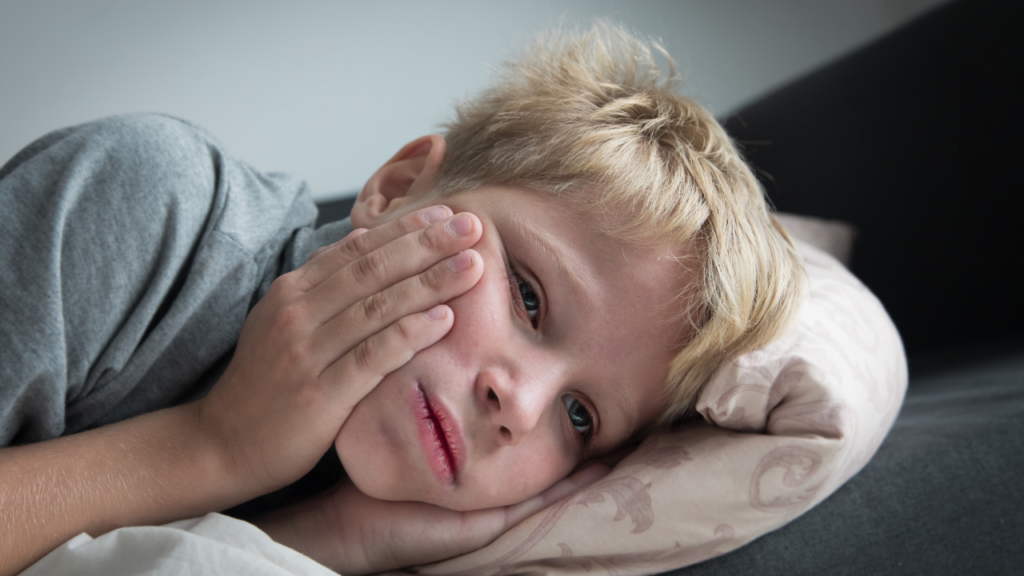
In children, TMJ dysfunction often develops from a combination of factors:
- Stress and anxiety. Emotional stress frequently shows up in the jaw. Kids who are anxious, overwhelmed at school, or going through big life changes often clench or grind without realizing it.
- Poor posture. Forward head posture, which has become increasingly common with heavy backpacks and hours of screen time, puts abnormal tension on the muscles and joints of the neck and jaw.
- Growth patterns and bite changes. As kids lose baby teeth and permanent teeth come in, bite changes can temporarily strain the jaw joint.
- Minor injury. A fall, a hit to the face during sports, or even a dental procedure that required the mouth to be open for a long time can irritate the joint and trigger symptoms.
How to Recognize TMJ Symptoms in Your Child
One reason TMJ in children gets missed is that its symptoms can look like something else entirely. Here is what to watch for.
Jaw clicking, popping, or locking
A clicking or popping sound when your child opens or closes their mouth is one of the most recognizable signs of TMJ. Some kids describe a feeling of the jaw getting stuck or catching mid-movement. This happens when the disc inside the joint is not gliding smoothly, usually due to muscle tension or misalignment.
Morning jaw soreness or facial pain
If your child regularly wakes up complaining that their jaw, face, or temples hurt, they are likely clenching or grinding during sleep. The pain is often worst in the morning and eases as the day goes on, which makes it easy to dismiss as just another complaint before school.
Teeth grinding (bruxism) during sleep
Bruxism, the clinical term for teeth grinding, is closely linked to TMJ dysfunction in children. Some kids grind loudly enough that parents hear it through the door. Others grind more quietly but show wear on their teeth over time. Either way, consistent grinding puts significant stress on the joint and the surrounding musculature.
Frequent headaches with no clear cause
Tension headaches that originate from the jaw and neck are often written off as dehydration, vision problems, or school stress. If your child has recurring headaches that start at the temples or the base of the skull and nothing else explains them, TMJ or cervical spine tension may be the source worth investigating.
Ear pain or ringing with no infection present
Because the TMJ sits directly in front of the ear canal, referred pain from the joint can feel exactly like an ear infection. If your child has been seen by a pediatrician for ear complaints and the ears keep coming back clear, jaw tension is a logical next question.
How Chiropractic Care Addresses TMJ in Children
The connection between cervical spine alignment and jaw tension
The jaw and the upper cervical spine are closely linked. The muscles that control jaw movement attach to the skull and neck, and the nerves that supply the jaw originate in the upper cervical spine. When the vertebrae in the neck are misaligned or restricted in their movement, they create tension that radiates into the jaw and face. Addressing cervical spine alignment is often a key part of effective TMJ treatment in children.
How gentle adjustments reduce muscle tension around the jaw joint
Chiropractic adjustments restore proper motion to the joints of the neck and, when indicated, the jaw itself. As spinal alignment improves, the muscles of the jaw and face can relax because they are no longer compensating for tension elsewhere. Some children also benefit from soft tissue work to the jaw musculature directly, which helps reduce chronic tightness in the masseter and pterygoid muscles (the primary muscles involved in chewing and clenching).
Working alongside your child’s dentist, not against them
Chiropractic care is not a replacement for your child’s dental care. For kids with significant bruxism, a night guard from the dentist may still be appropriate. What chiropractic adds is an assessment and treatment of the structural and muscular factors that may be driving the problem in the first place. We are happy to communicate with your child’s dental provider and coordinate care when that makes sense.
What a Chiropractic Visit Looks Like for a Child With TMJ
A child-friendly assessment
At Irmo Family Chiropractic, kids are not treated like small adults. The assessment for a child with suspected TMJ includes a review of their health history, sleep patterns, posture, and daily habits, as well as a hands-on evaluation of the cervical spine and jaw. We take time to explain what we are doing in terms your child can understand and make sure they feel comfortable before anything else happens.
What techniques are used and why they are comfortable
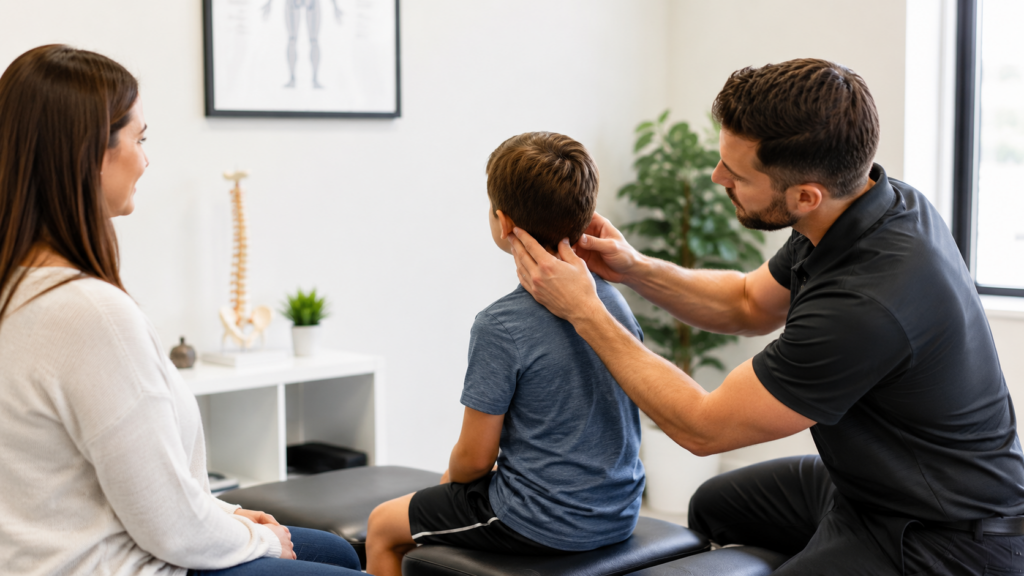
Pediatric chiropractic adjustments use far less force than adult adjustments. For children with TMJ, care typically involves gentle cervical spine adjustments, soft tissue work on the muscles of the jaw and neck, and posture guidance for parents to reinforce at home. There are no sudden movements and no discomfort. Many kids are surprised by how gentle the process actually is.
What Else Can Help at Home
Chiropractic care works best when it is supported by small, consistent habits at home. Here are a few things you can do between visits.
Soft food tips during flare-ups
During periods when your child’s jaw is actively painful or sore, soft foods reduce the workload on the joint. Think soups, yogurt, scrambled eggs, smoothies, and pasta. Hard, chewy, or crunchy foods like bagels, raw carrots, or jerky keep the jaw muscles working overtime and slow recovery.
Simple jaw relaxation habits for kids
Teach your child to check in with their jaw throughout the day. The resting position for the jaw should be teeth slightly apart and lips lightly closed, not clenched or pressed together. A simple reminder to “teeth apart, tongue up” can make a surprising difference for kids who habitually hold tension in their jaw during the day.
The role of stress and screen time posture in TMJ symptoms
If your child’s TMJ flares with academic stress, social anxiety, or big transitions, that connection is worth taking seriously. Stress management habits like physical activity, consistent sleep, and limited before-bed screen time all support lower baseline tension in the jaw. Screen time posture also matters: a child hunched forward over a tablet for hours is loading the neck and jaw with the same mechanical strain that causes problems in adults.
Discover how chiropractic care can finally fix your desk-related back pain.
Frequently Asked Questions About TMJ in Children
Is TMJ common in kids?
More common than most parents expect. Research suggests that signs of TMJ dysfunction appear in a meaningful percentage of school-age children, and bruxism affects an estimated 15 to 33 percent of children at some point during childhood. The challenge is that symptoms are often attributed to other causes before anyone looks at the jaw and cervical spine.
Should I take my child to a dentist or chiropractor for TMJ?
Ideally, both. A dentist can assess the teeth for grinding wear and evaluate whether a dental appliance is needed. A chiropractor evaluates the structural and muscular factors that are often driving the problem. These approaches address different parts of the same issue, and they work well together.
Can a night guard fix TMJ in children?
A night guard can protect the teeth from grinding damage and reduce some jaw muscle strain, but it does not correct the underlying causes of clenching or misalignment. For some kids, a night guard is an important protective measure. For others, addressing the cervical spine and muscle tension first reduces grinding enough that a night guard becomes less necessary. This is a conversation worth having with both your dentist and your chiropractor.
How long does it take to see improvement with chiropractic care for TMJ?
It varies. Many children show noticeable improvement in headache frequency and jaw discomfort within a few weeks of beginning care. Others with longer-standing patterns or more significant misalignment take longer. We set realistic expectations at the first visit and adjust the care plan based on how your child responds.
At what age can children start chiropractic care?
Children can receive chiropractic care at any age, including infancy. For TMJ specifically, care is most commonly sought for school-age children and teenagers, but there is no minimum age. Pediatric chiropractic techniques are adapted to each child’s size and developmental stage.
Your Child Does Not Have to Keep Living With Jaw Pain
TMJ symptoms in kids can quietly affect their sleep, their focus, and their daily comfort for months before anyone connects the dots. If your child has been dealing with jaw clicking, morning headaches, or nighttime grinding, it is worth getting a proper assessment before jumping to dental appliances or medication. At Irmo Family Chiropractic, we take the time to understand what is actually going on and build a plan that fits your child. Learn more about how wellness chiropractic supports kids at every stage, or schedule an appointment for your child today.