
Chiropractic Records for a Personal Injury Claim in Irmo: What Documentation Matters Most
This article is for educational purposes only and does not constitute legal advice. If you have questions about a personal injury claim, please consult a licensed attorney.
Chiropractic records personal injury claim Irmo queries usually come from people who already know two things: they’re hurt, and paperwork matters. After a car accident, treatment records do more than track your recovery. They document symptoms, exam findings, diagnoses, treatment plans, and progress over time. In this article, Irmo Family Chiropractic explains which chiropractic records are most useful after a crash, why timely documentation matters, and how organized visit notes can support both better care and a stronger insurance or personal injury file. This is educational information, not legal advice.
Why Chiropractic Records Matter After a Car Accident
When you file an insurance claim or a personal injury case after a car accident, the strength of that file depends heavily on what your medical records actually say. It isn’t enough to tell an adjuster or attorney that you were hurt. You need documentation that shows when symptoms started, what a provider found during examination, how the injury was diagnosed, and how it responded to treatment over time.
 Chiropractic records are uniquely valuable in this process because they capture details that other types of medical visits sometimes miss. A chiropractor who treats auto accident injuries regularly documents things like restricted range of motion, areas of muscle spasm, spinal misalignment, and neurological findings at every visit. That creates a timeline of evidence that connects the collision to the injury and tracks progress week by week.
Without that documentation, there are gaps. And gaps in the record are exactly what insurance adjusters look for when evaluating or disputing a claim. Consistent, detailed records from a chiropractic provider make it harder to argue that the injury was minor, unrelated to the crash, or resolved faster than the patient reports.
This does not mean that treatment should be driven by paperwork. Good care naturally produces good records. But understanding what goes into a strong treatment file helps patients stay informed and engaged throughout the process.
What Documentation Should Be in a Strong Treatment File
A solid chiropractic treatment file after a car accident typically includes several categories of documentation, each serving a specific purpose in your care and in any claim that follows.
Initial examination and history. This is the record from your first visit. It should include a detailed account of the accident, the direction and speed of impact if known, your position in the vehicle, and what symptoms you noticed immediately and in the days that followed. It also includes findings from the physical exam, such as posture analysis, range of motion testing, palpation findings, orthopedic tests, and neurological screening.
Diagnosis. Based on the exam, the chiropractor documents a formal diagnosis. This might include terms like cervical sprain or strain, lumbar subluxation, myofascial dysfunction, or radiculopathy depending on what the evaluation reveals. A clearly stated diagnosis ties symptoms to a clinical finding, which strengthens both the treatment plan and any related claim.
Treatment plan. This outlines the recommended course of care, including the types of treatment to be used, the expected frequency of visits, and the goals for recovery. It gives structure to the process and shows that the care being provided is purposeful and connected to the diagnosis.
Visit notes. Every appointment should produce a record that includes what the patient reported that day, what the provider observed during examination, what treatment was performed, and how the patient responded. These notes are the backbone of a treatment file because they show continuity. If pain improved after a series of adjustments and then returned after a gap in care, the notes reflect that. If a new symptom appeared three weeks into treatment, the note captures it in real time.
Progress evaluations. At regular intervals, the provider conducts a more thorough reassessment to measure how far the patient has come. These evaluations compare current range of motion, pain levels, and functional ability to what was recorded at the initial exam. They are especially useful for insurance and legal purposes because they show measurable change over time.
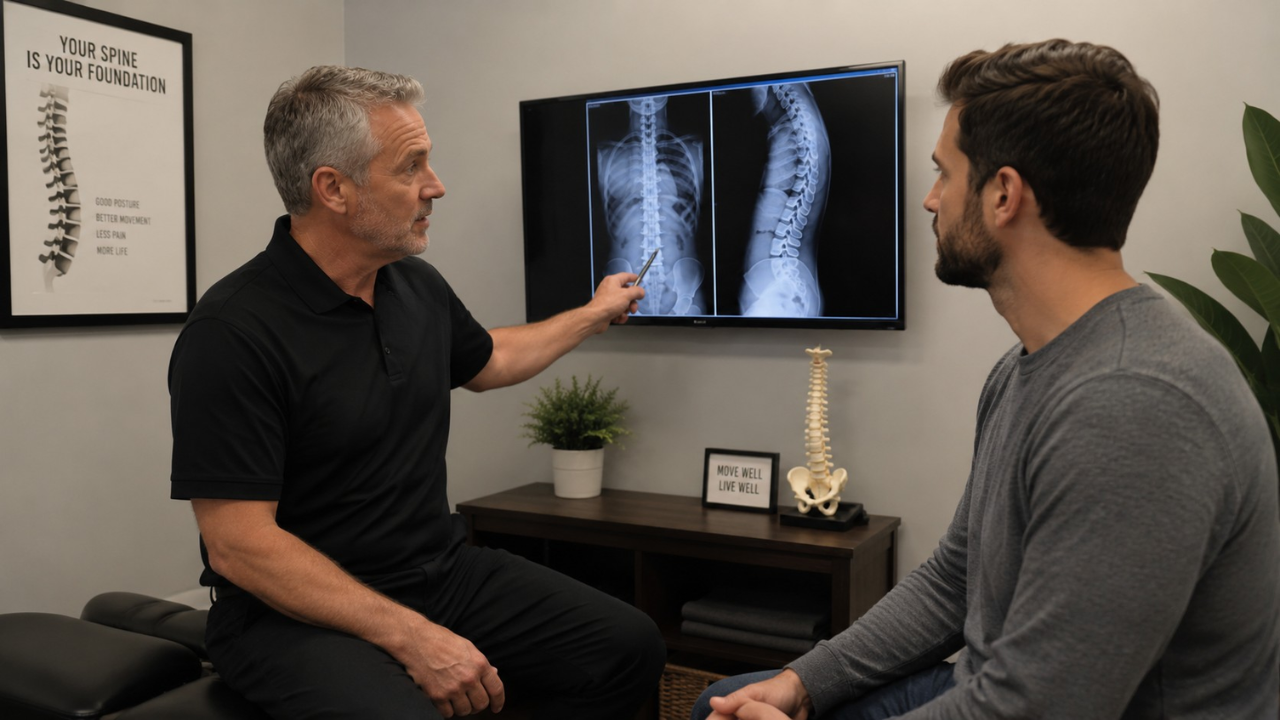
Referral notes and imaging reports. If the chiropractor orders imaging or refers the patient for additional evaluation, those records and reports become part of the file as well. Cross referencing with other providers adds depth and credibility to the overall picture.
When all of these pieces are present and consistent, the treatment file tells a clear story: the patient was injured, they sought care, the care was appropriate and progressive, and the injury either resolved or continued to require attention.
Good records start with good care. Start yours today.
How Early Visit Notes Help Track Delayed Symptoms
One of the most important roles chiropractic records play after a car accident is capturing symptoms that appear days or even weeks after the collision. Delayed onset pain is extremely common in auto injuries, and it can create confusion for patients and complications for claims if it is not documented properly.
When you visit a chiropractor shortly after a crash, the provider records your baseline. That includes what hurts, what doesn’t hurt, and how your body is functioning at that point. If new symptoms appear at subsequent visits, those changes are noted in real time with a date and clinical context attached to each one.
This matters because insurance companies sometimes challenge delayed symptoms by suggesting they were caused by something other than the accident. A well documented treatment file that shows a patient presented three days after a collision with neck stiffness, then developed lower back pain by day ten, creates a clinical narrative that is much harder to dispute than a patient simply recalling events from memory months later.
Early documentation also helps the treating chiropractor adjust the care plan. If a new area of pain develops, the diagnosis and treatment approach can be expanded in a way that is clearly documented and connected to the original injury event.
For a closer look at why getting evaluated quickly makes such a difference, read Auto Accident Chiropractor in Irmo, SC: What To Do in the First 72 Hours on our blog.
What Patients Should Keep for Their Own Records
While your chiropractor maintains a clinical file, it is also helpful for patients to keep their own organized set of records throughout the recovery process. This does not replace what the provider documents, but it adds a layer of personal accountability that can be useful if questions arise later.
 Consider keeping copies or records of the following: the police report or accident report number, any emergency room or urgent care visit records from the day of the crash, a personal log of symptoms including when they started, how they change day to day, and what activities they affect, appointment dates and a summary of what was discussed or treated at each visit, receipts or statements related to treatment costs, and any correspondence with insurance companies or legal representatives.
A simple folder or digital file labeled by date can go a long way. Attorneys and adjusters often ask for information weeks or months after treatment begins, and having it organized ahead of time reduces stress and speeds up the process.
It is also worth noting that if you’re working with a personal injury attorney, they will typically request records directly from the provider. But having your own copy ensures you’re never caught off guard by a question about your treatment history.
How Irmo Family Chiropractic Approaches Auto Accident Documentation
At Irmo Family Chiropractic, documentation is built into every step of the care process, not treated as an afterthought. The team understands that patients dealing with auto accident injuries need more than pain relief. They need a record that reflects the full scope of what happened and how care is helping them recover.
Every new auto accident patient receives a comprehensive initial evaluation that captures the details of the collision, a full physical examination, and a clearly stated diagnosis. From there, each visit is documented with notes that reflect the patient’s current status, what treatment was performed, and how the body is responding.
Progress evaluations are scheduled at appropriate intervals to measure changes in range of motion, pain levels, and functional ability. When MLS Laser Therapy or massage therapy is included as part of the treatment plan, those sessions are documented as well, including the areas treated, the settings used, and the patient’s response. To learn more about how these therapies work together, read How Chiropractic, MLS Laser, and Massage Work Together After a Car Accident in Irmo.
The goal is to create a treatment file that is thorough enough to support both the clinical side and the administrative side of recovery. Whether you’re dealing with your own insurance company, a third party insurer, or a personal injury attorney, the records produced during your care at Irmo Family Chiropractic are designed to be clear, organized, and medically substantive.
To meet the About the Doctors behind this approach, visit our team page.
FAQ: Chiropractic Records and Personal Injury Claims in Irmo
What chiropractic records matter for a personal injury claim?
The most important records include the initial examination findings, the formal diagnosis, the treatment plan, individual visit notes, progress evaluations, and any imaging or referral documentation. Together, these records create a timeline that connects the accident to the injury and tracks recovery over time. Consistent, detailed notes from every visit are especially valuable because they show how the injury evolved and how the patient responded to care.
How soon should I start care after a car accident?
As soon as possible. Ideally within the first few days after the collision. Early evaluation establishes a clinical baseline and begins documenting your condition while details are fresh. Delays in seeking care can create gaps in the record that insurance companies may use to question the severity or cause of your injuries.
What should my accident treatment records include?
A strong file should include the history of the accident, a physical examination with measurable findings, a diagnosis, a treatment plan with goals and timelines, individual visit notes from every appointment, and periodic progress evaluations. If other therapies like MLS Laser Therapy or massage were part of the plan, those should be documented as well.
Can chiropractic notes help document delayed symptoms?
Yes. Delayed symptoms are common after car accidents because of adrenaline and the gradual buildup of inflammation. When a chiropractor evaluates you early and documents your baseline, any new symptoms that develop at later visits are captured with a date and clinical context. This creates a documented timeline that supports the connection between the accident and the evolving injury.
How do I keep my records organized after a crash?
Start a dedicated folder, either physical or digital, and organize it by date. Include copies of the accident report, emergency room or urgent care records, a personal symptom log, appointment dates and visit summaries, treatment cost receipts, and insurance correspondence. Having everything in one place makes it easier to respond to requests from attorneys or insurance adjusters.
Good Documentation Starts With Good Care
After a crash, the goal isn’t just to collect paperwork. It’s to receive timely, consistent care that clearly documents what your body is going through and how it responds over time. For step by step guidance on what to do immediately after a collision, start with Auto Accident Chiropractor in Irmo, SC: What To Do in the First 72 Hours on our blog. If you need an evaluation or want to begin treatment with detailed accident documentation, contact Irmo Family Chiropractic through our Auto Accident Injury Treatment page or Contact Us to schedule your visit.